The Credential You Forgot Is Still on the Internet
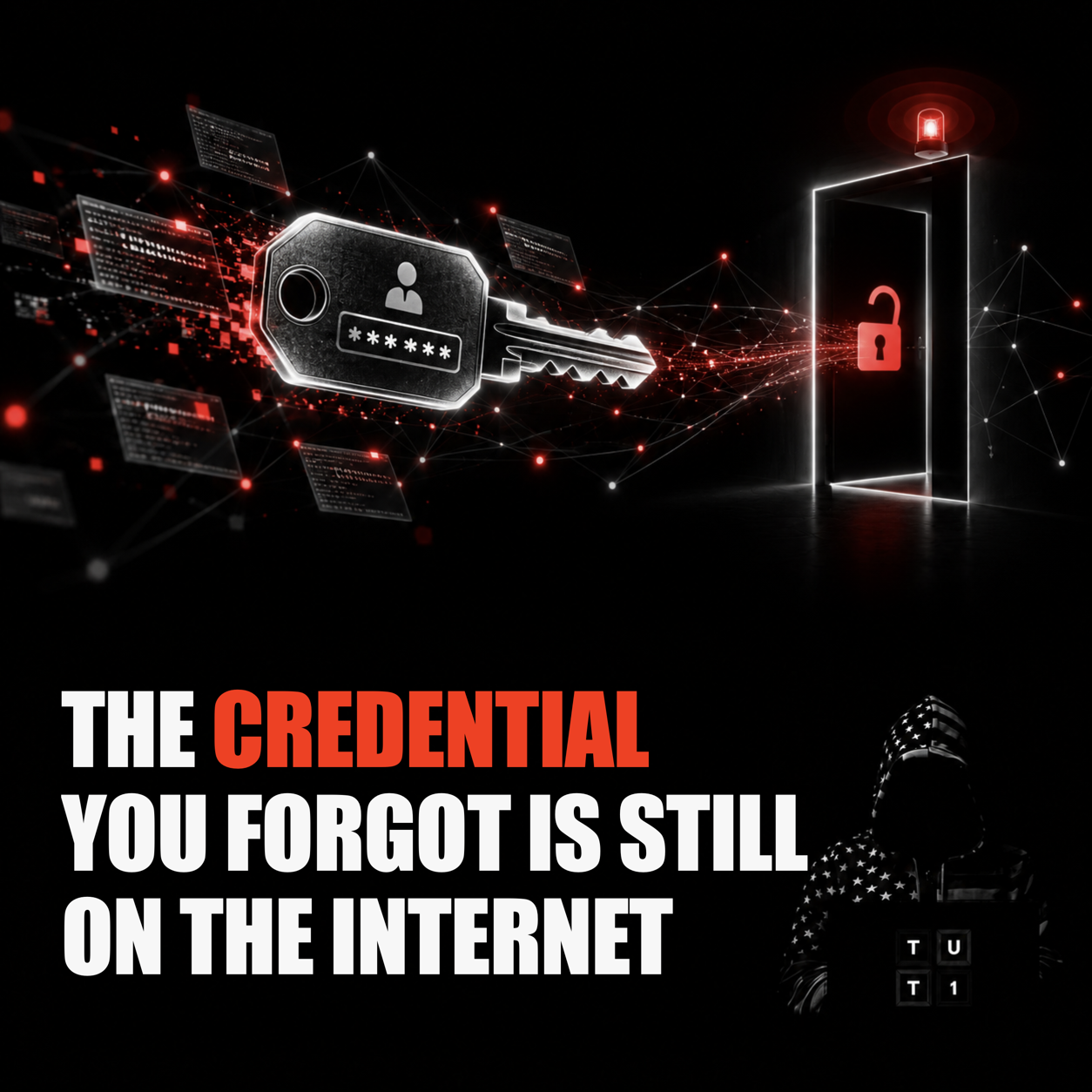
The credential you forgot is still part of your attack surface.
Most teams treat a leaked password as an identity problem. It is also an external exposure problem.
A credential becomes dangerous when it still connects to something reachable: an old VPN, an unmanaged SaaS tenant, a supplier portal, a forgotten administrative interface, or a legacy remote-access service that no one has formally retired.
In a 2021 CISA incident-response report, a threat actor accessed an organization through a Pulse Secure VPN using several valid accounts. MFA was not enabled on those accounts. CISA was explicit about an important limitation: it did not know how the credentials were first obtained. That distinction matters. We should not invent a dark-web origin when the evidence does not establish one.
But the defensive lesson is unmistakable: a password is only one half of the exposure. The other half is the external door that still accepts it.
That is why credential exposure monitoring should not end with a breach-data alert. It should trigger a disciplined outside-in review:
- Contain the identity: reset, revoke sessions and tokens, rotate secrets, and investigate privileged or shared-account relationships.
- Map the reachable paths: identify every internet-facing VPN, SSO endpoint, webmail service, remote desktop gateway, and supplier portal associated with that identity population.
- Validate the controls: enforce phishing-resistant MFA where possible, retire dormant accounts, and remove or restrict unnecessary remote services.
- Connect ownership to evidence: every exposed identity path needs a business owner, a technical owner, and a deadline for validation.
This is where many programs lose time. They have separate dashboards for identity, vulnerability management, DNS, cloud, and threat intelligence—but no single view of the relationships between them.
A leaked password is not automatically an incident. An unobserved identity path is.
TUT1 helps security teams map the exposure of their external attack surface—from domains, subdomains, IPs, and live services to credential, TLS, phishing, and dark-web signals—so teams can validate what matters before attackers do.
Primary topic · Credential exposure monitoring