Step 1
Discover
Map the external attack surface: domains, subdomains, IPs, ports, ASNs and live internet-facing services.
Mapping Internet-facing assets, vulnerabilities, leaked credentials, and phishing domains provides your team with a clear path to reducing risk exposure.

Built by a hacker from years of field experience, shaped into an accessible platform for anyone who needs to understand their external exposure.
Map the external attack surface: domains, subdomains, IPs, ports, ASNs and live internet-facing services.
Identify exposed services, certificate issues, weak headers, CVEs and breached credentials tied to the target.
Keep the same dataset navigable across landscape, maps, certificates and graph views as new evidence appears.
Surface high-signal findings quickly, so critical exposures are easy to spot without digging through raw output.
visibilityOverview
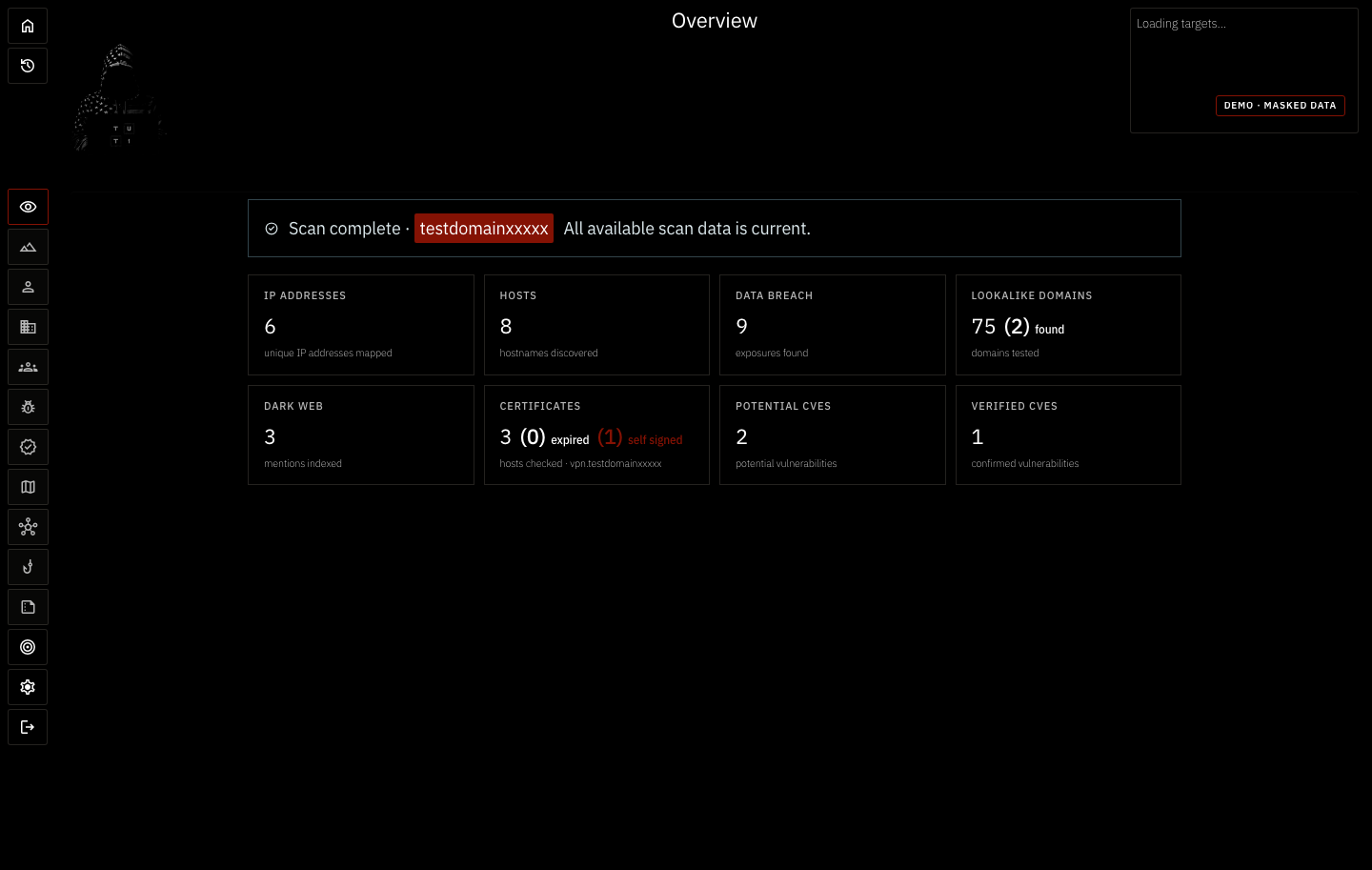
Overview converts the selected domain into a clear inventory of hosts, IP addresses, credential exposure, certificate checks and potential CVE signals. It gives the team one concise place to start validation and ownership review.
landscapeLandscape
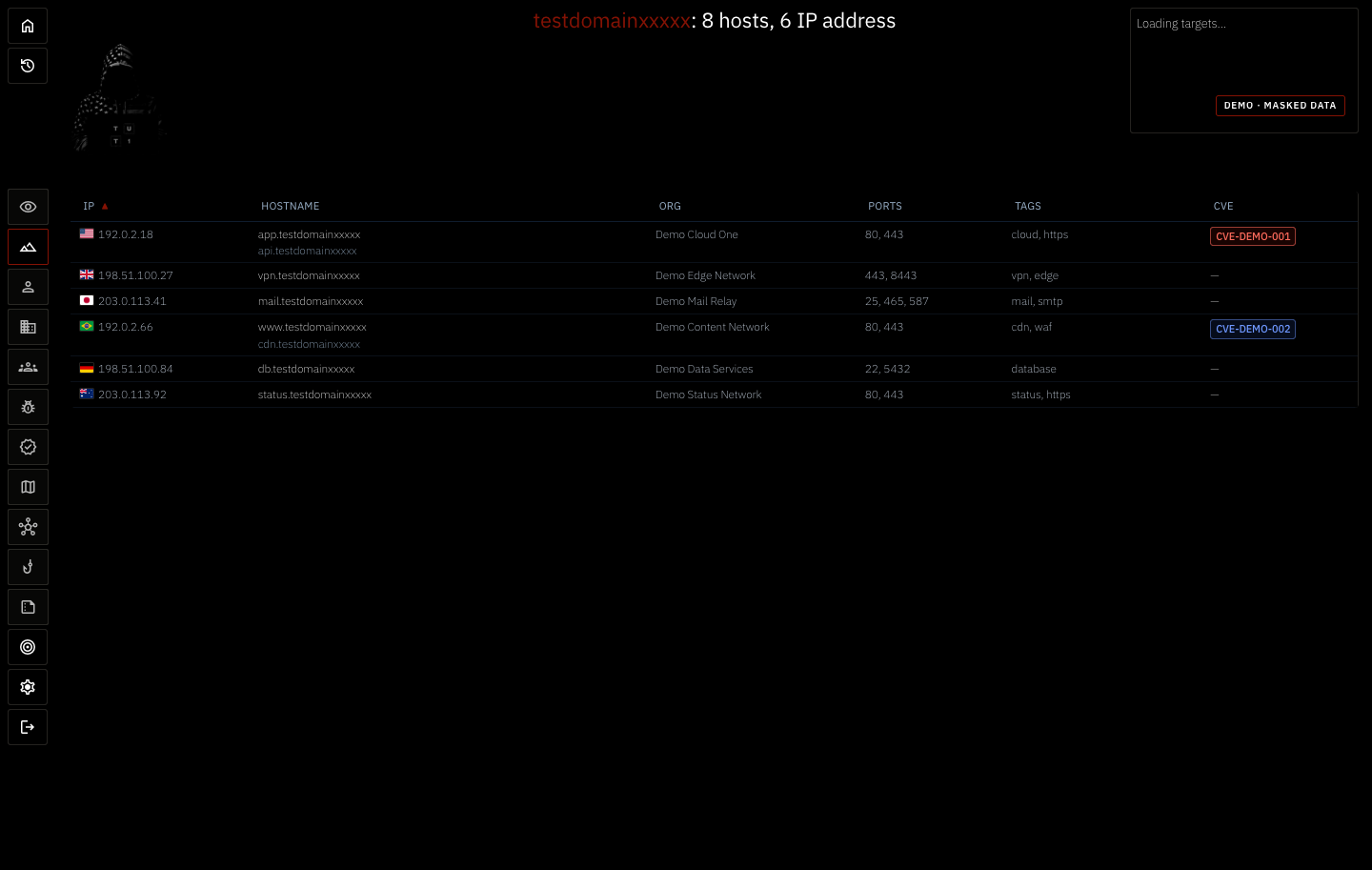
Map domains, subdomains, IP addresses, ASNs, live services and certificates in one working inventory. Passive discovery and authorized active checks give the team a practical outside-in view of what is exposed.
personEmployees
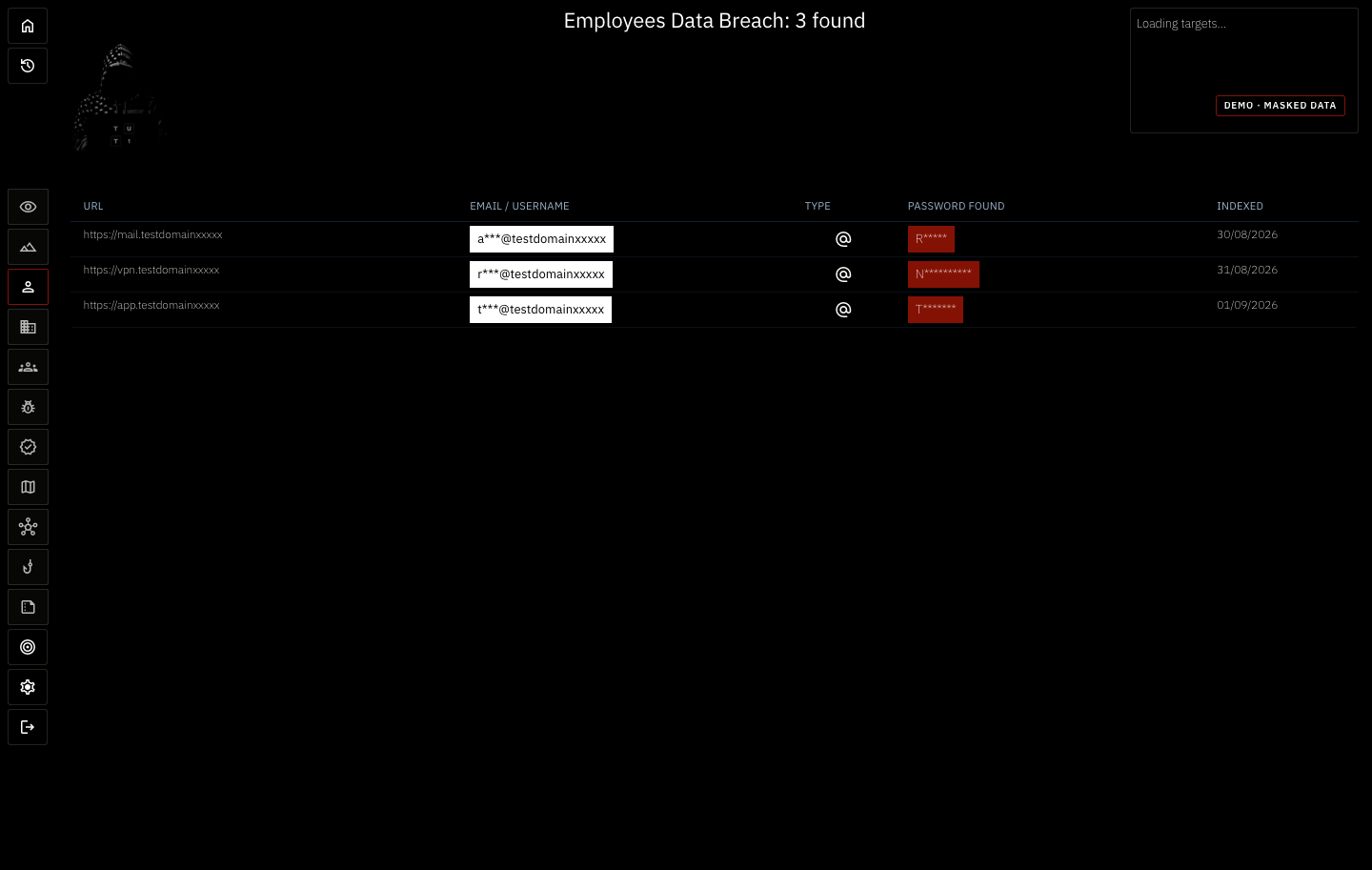
Review masked employee identifiers, associated URLs, password evidence and dynamically indexed dates in one dedicated view. The demo keeps passwords fictional and masked, while showing the evidence needed to begin a controlled response.
business3rd Parties
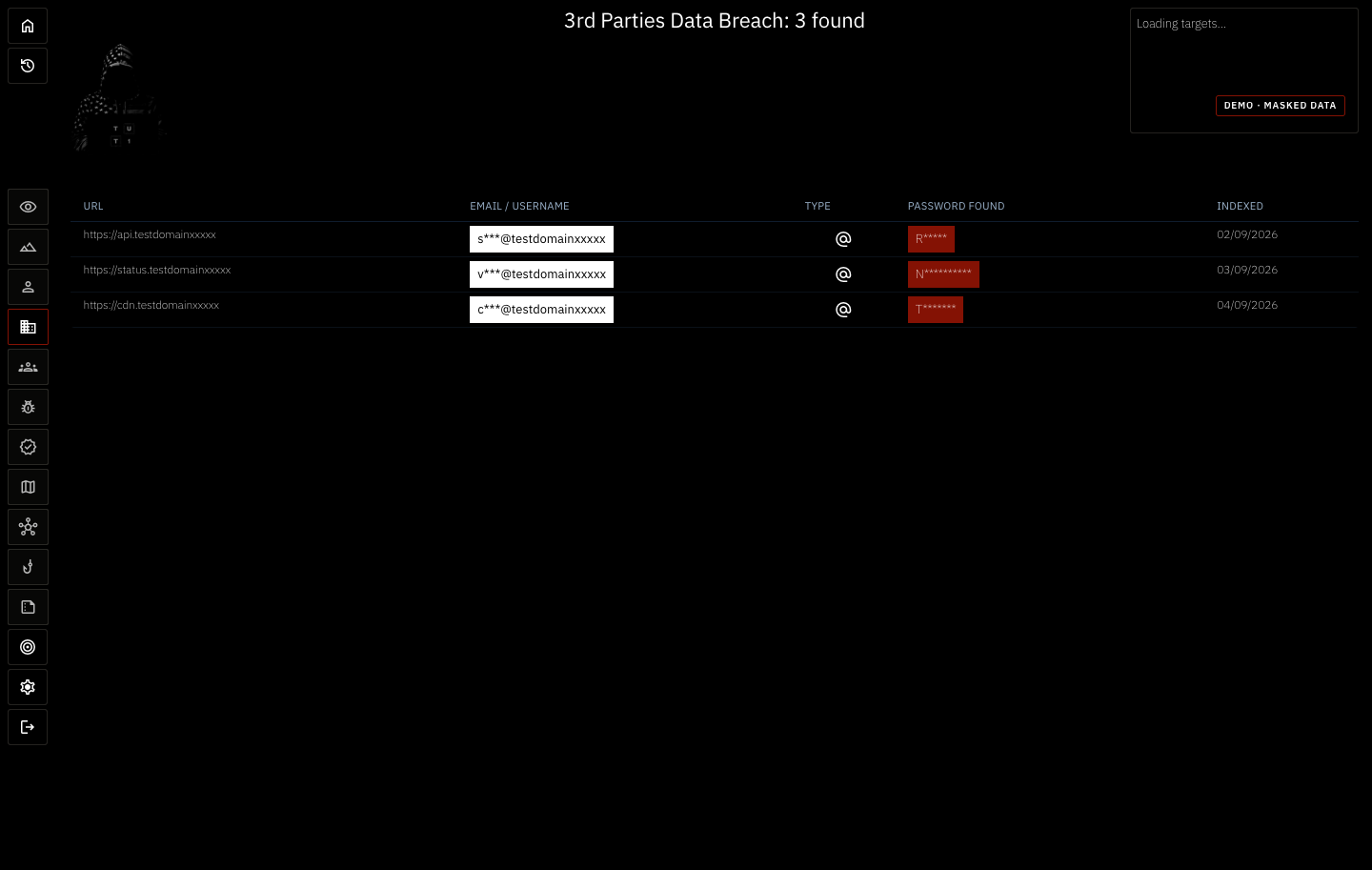
Third-party results are kept apart from employee records so security and vendor owners can assess shared services, confirm relevance and coordinate remediation without mixing identity populations.
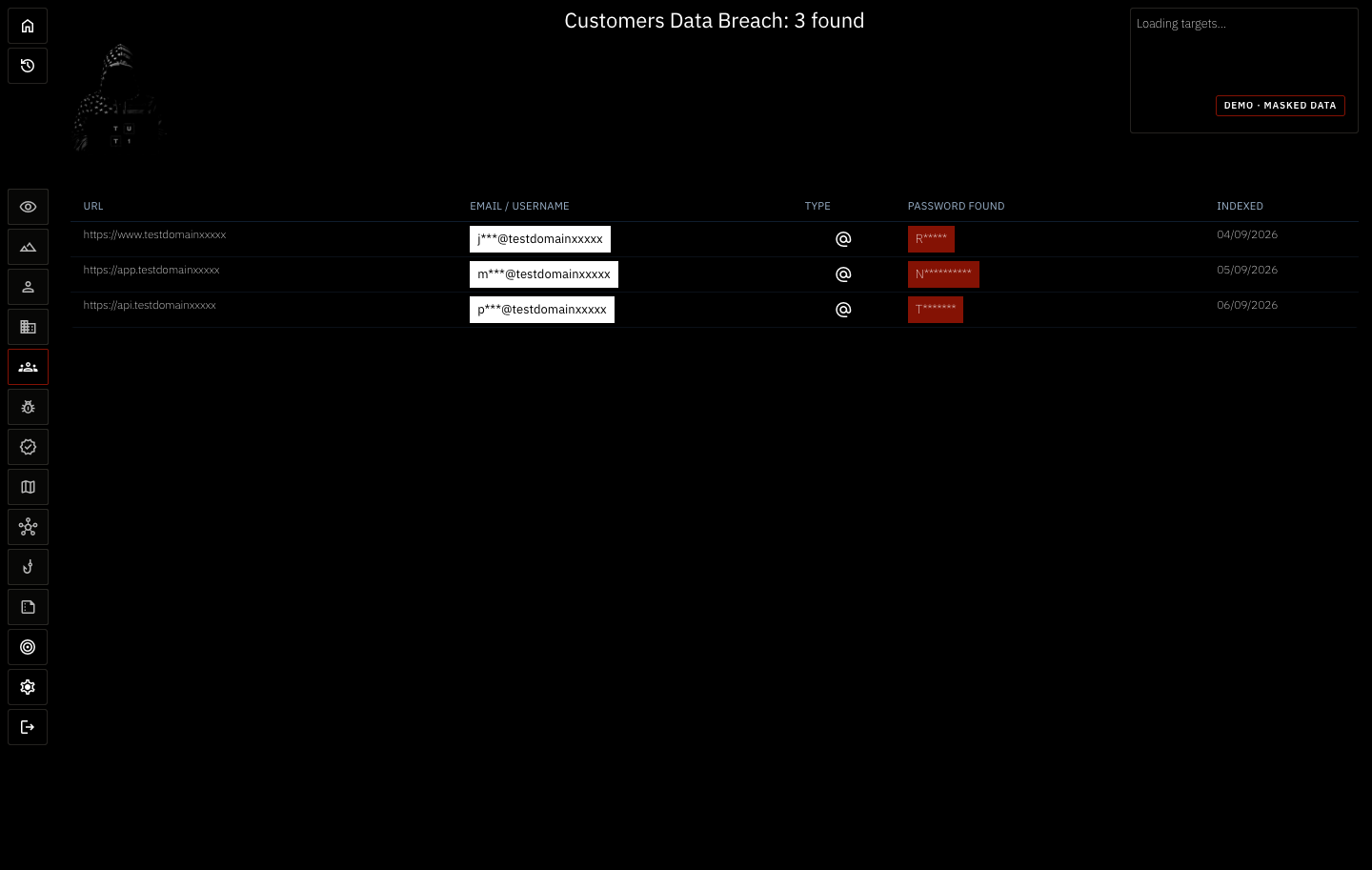
groupsCustomers
Customer indicators have their own review queue, pairing masked identity evidence with the service and index date. This separation supports the response and communication policy appropriate to customer data.
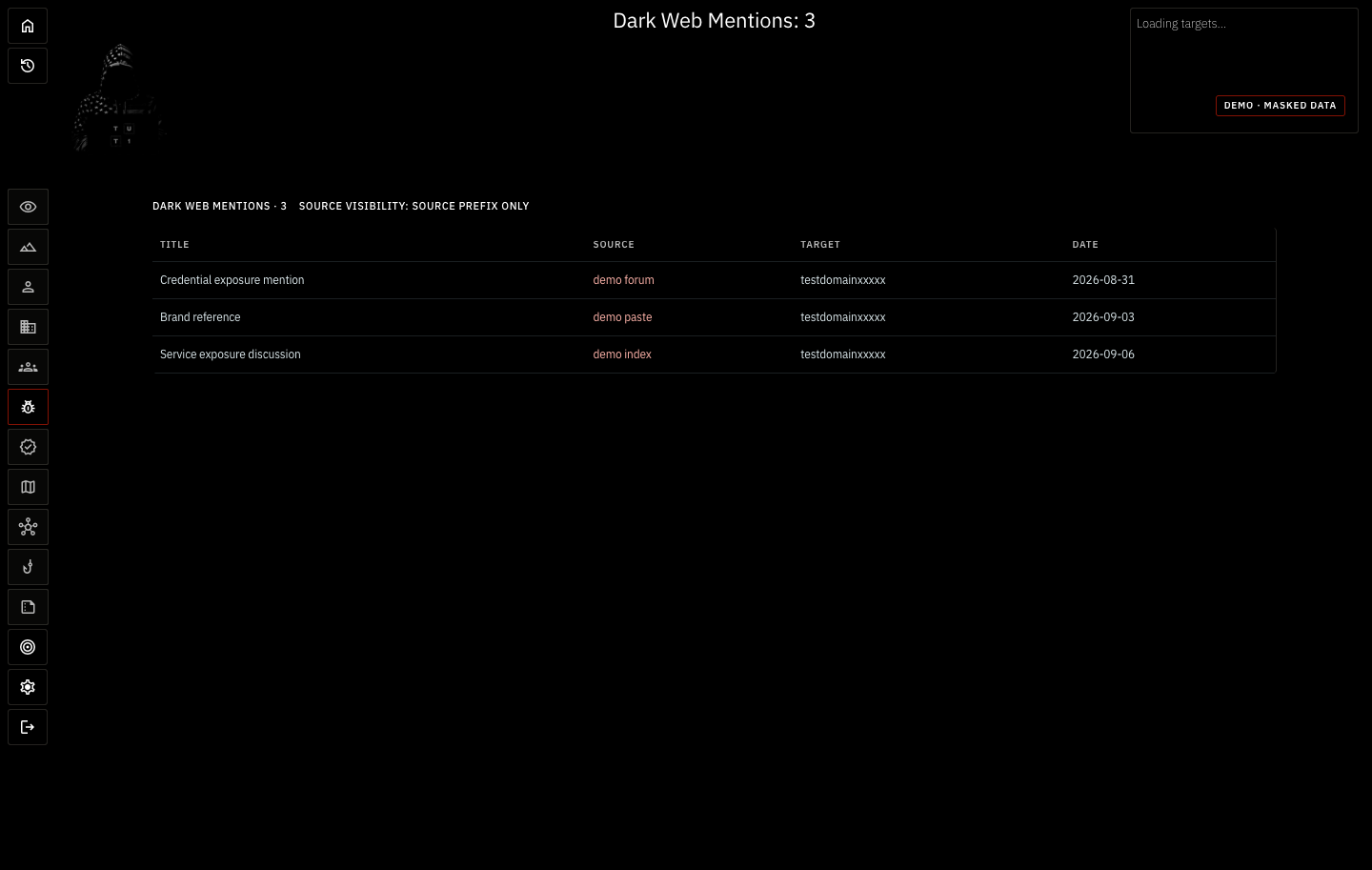
pest_controlDark Web
Dark-web monitoring brings together fictional forum, paste and index mentions for the demo domain. Signals require validation, but the shared context helps investigators judge what deserves action.
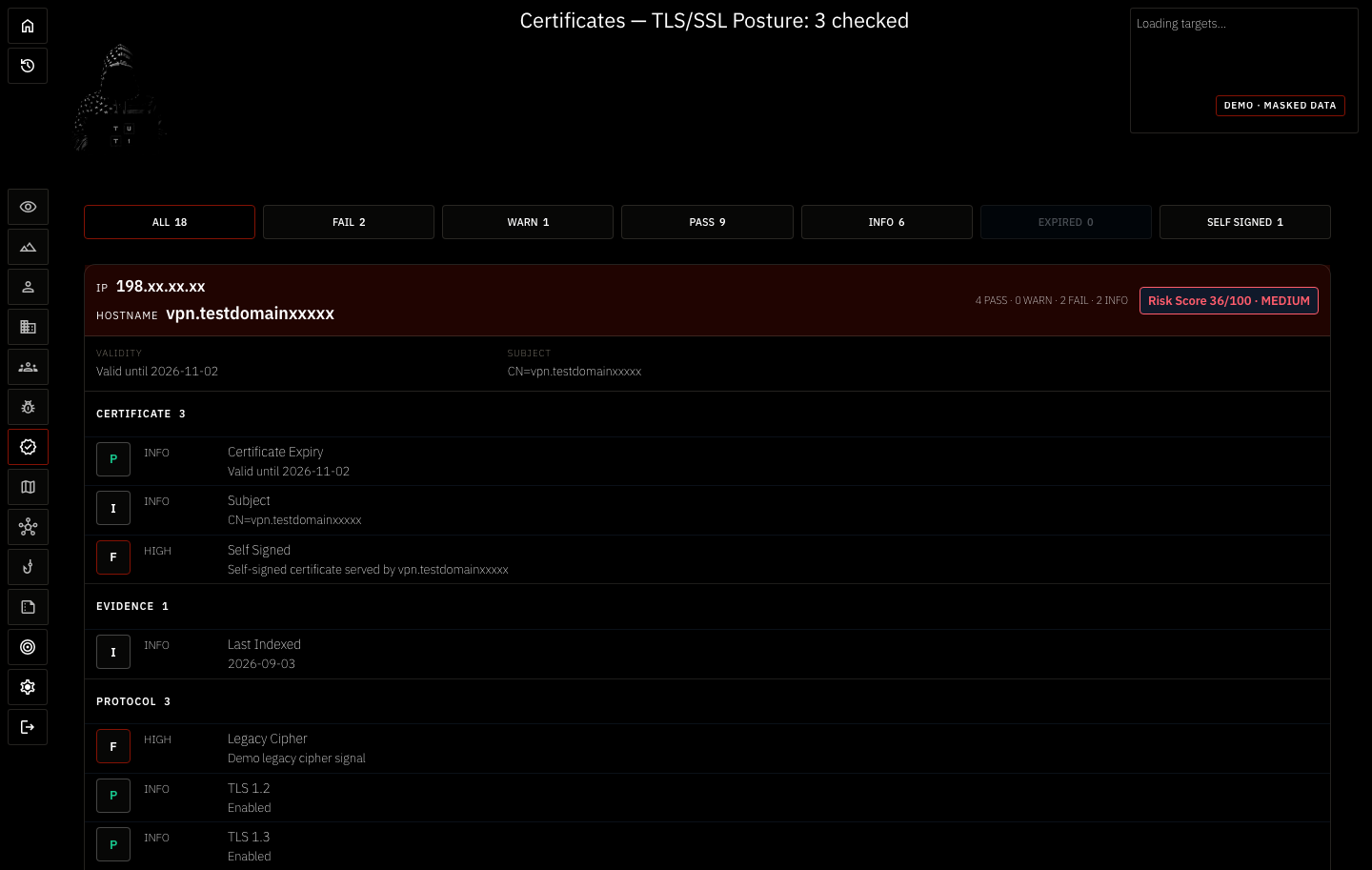
verifiedCertificates
Certificate monitoring groups expiry, subject, protocol coverage and last-indexed evidence by hostname. It makes certificate ownership and configuration review visible beside the external assets they protect.
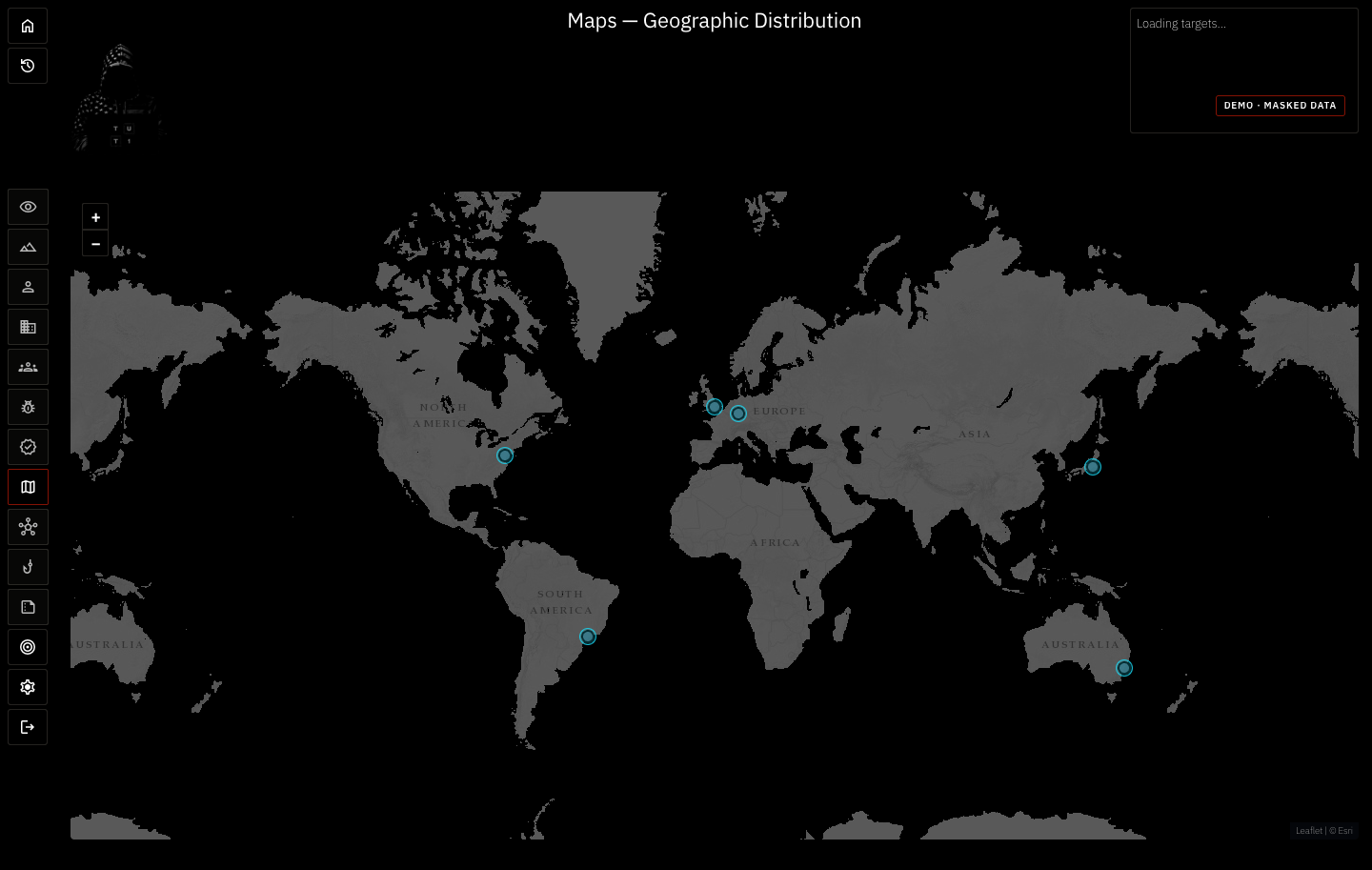
mapMaps
The map turns an asset inventory into geographic context. Reviewers can spot unexpected locations and start an ownership conversation with country, city and service evidence in view.
hubHolistic
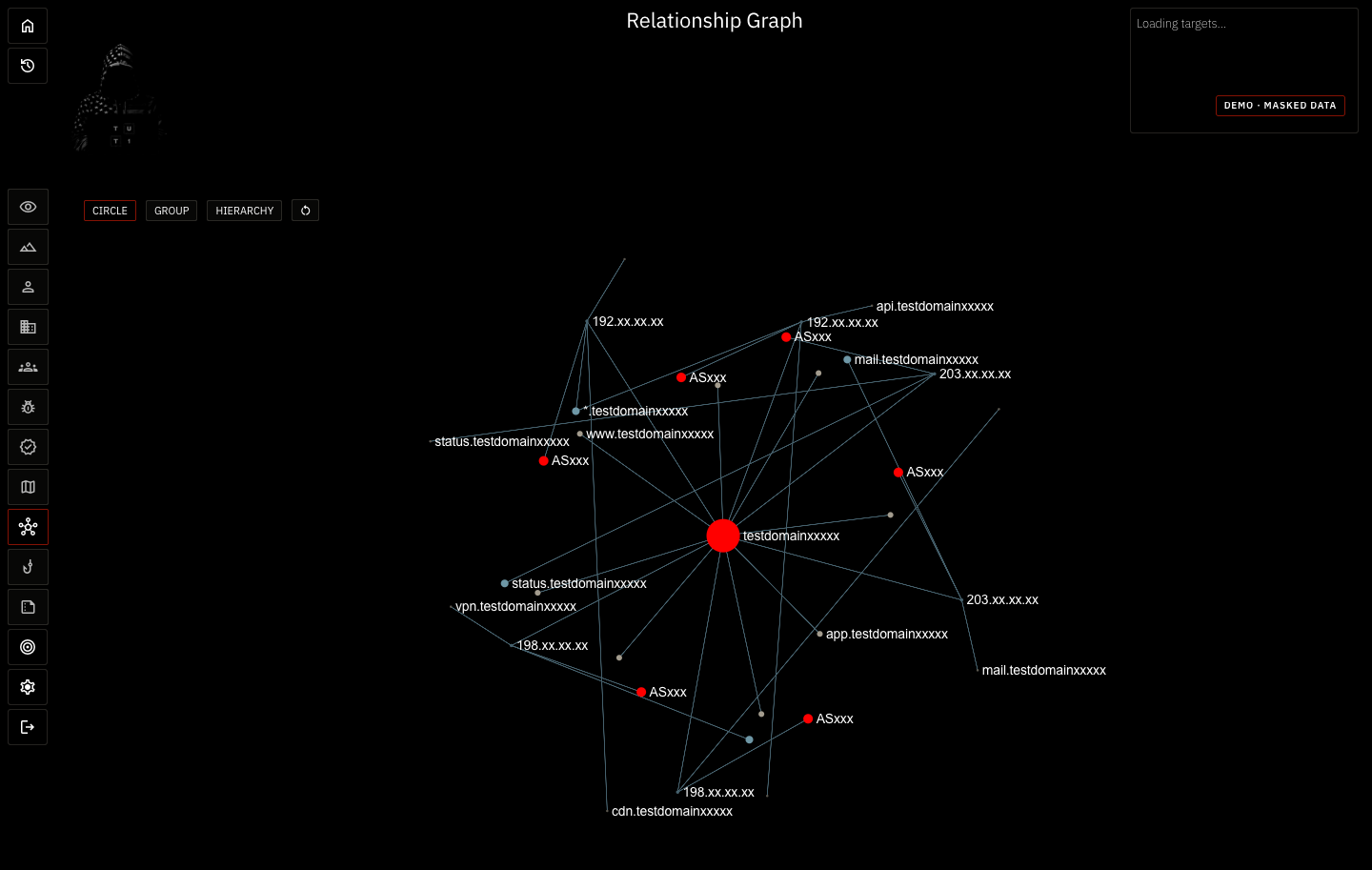
Holistic brings subdomains, IP addresses and related signals into a relationship view. In the demo, labels are already visible so the fictional topology can be understood immediately.
phishingPhishing
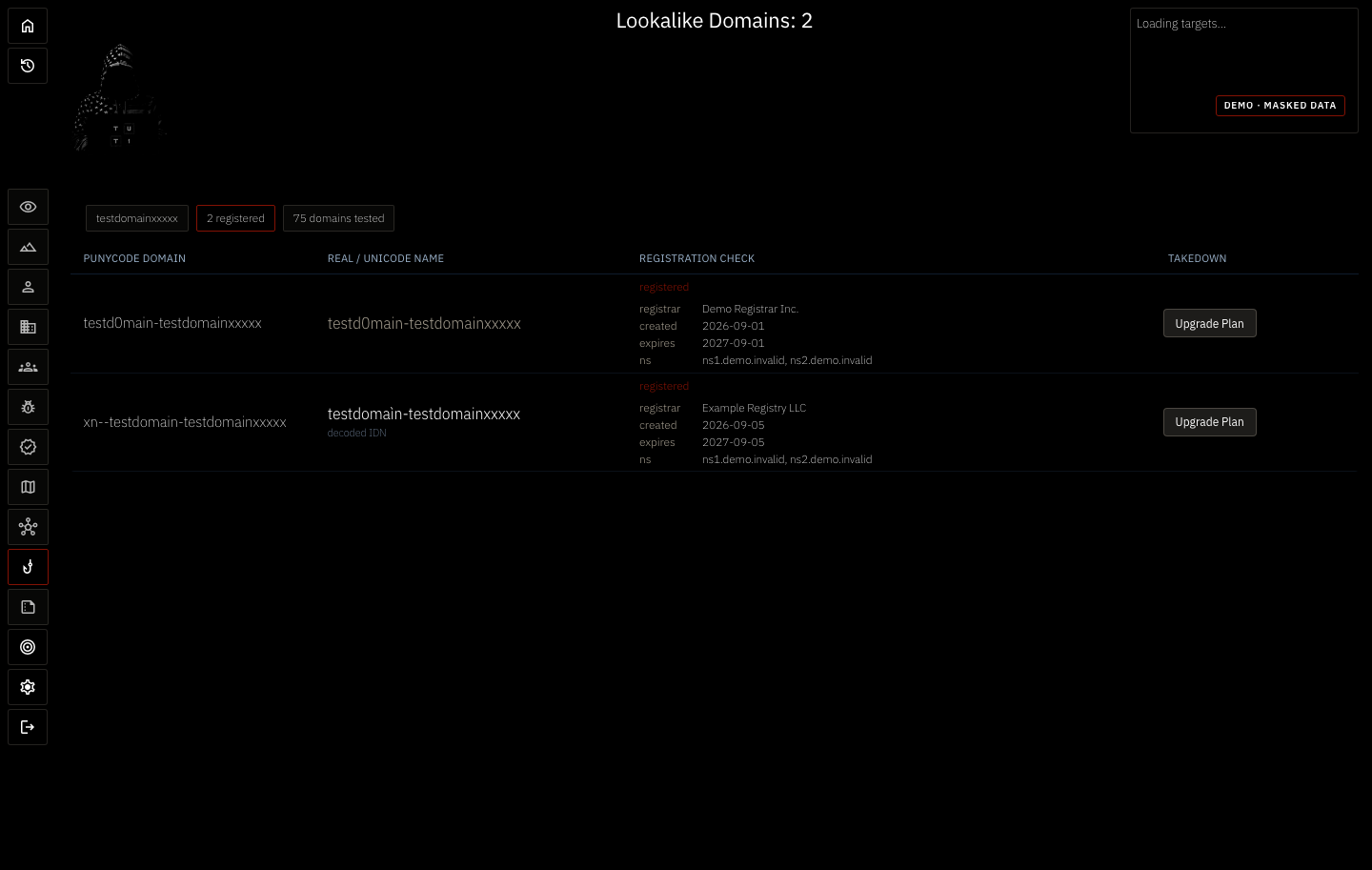
Phishing monitoring separates the visual look-alike from registration, registrar, nameserver and date evidence. That gives security and brand-protection teams the context to validate a signal before escalation.
summarizeReport
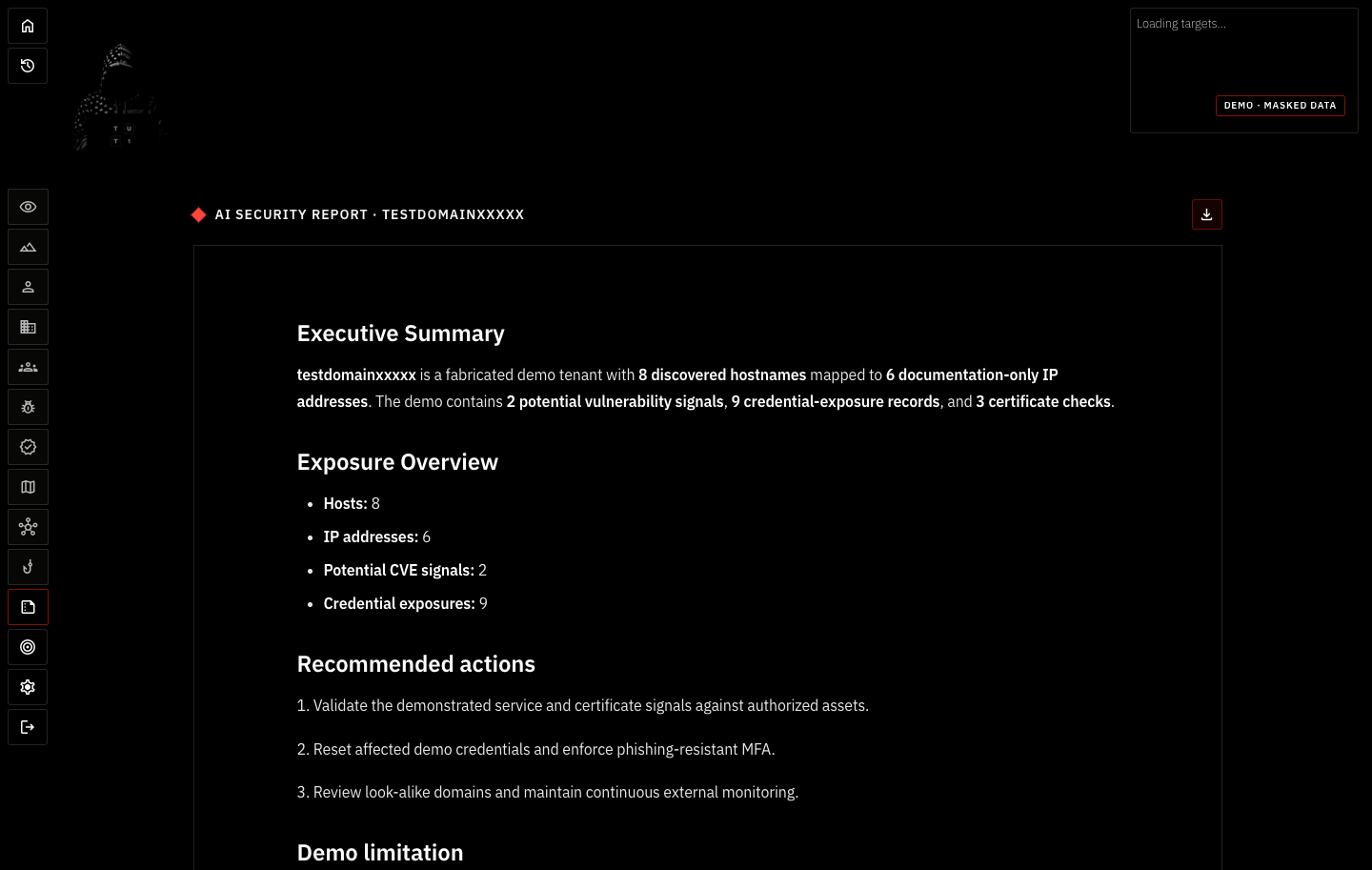
Report turns the current inventory and exposure signals into a concise management-ready summary with recommended actions. Demo data remains explicitly fictional, while the workflow shows how evidence can support remediation.
Automated, on every scan — no manual setup required.
Subdomain and host discovery from third-party indexes and DNS — no packets touch the target until you ask for an active scan.
Known CVEs matched passively against fingerprinted services — surfaced from the same discovery pass, before any active probing.
Active scanning across every live host — open ports, running services and known CVEs (critical & high severity) — so you know what's actually exploitable, not just what's exposed.
Full chain validation on every host: expiry, trust, hostname match, weak keys and legacy TLS versions, flagged automatically.
Homoglyph and look-alike domain generation with live registration checks, so impersonation attempts surface before they're used against you.
Compromised credentials tied to your employees, third parties and customers, tracked across known breach data.
Continuous watch over your external exposure between scans, so nothing new goes unnoticed.
Rapid removal of malicious look-alike domains and phishing infrastructure once detected.
Ongoing visibility into forums, marketplaces and leak channels where your data and brand get discussed before it reaches the surface web.
Credential-leak coverage built from large-scale indexed breach sources.
Searches are checked against a massive credential-leak corpus so exposed employees, third parties and customers can be surfaced quickly.
Indexed breach files, stealer logs, combolists and dark-web dumps provide context on where credential exposure appears.
New credential intelligence is continuously ingested and analyzed to surface emerging exposure.
Start with passive visibility, add continuous monitoring, or activate deeper enterprise testing.
One domain, up to 25 subdomains, and two scheduled scans per month — plus shareable reports for clients and audits.
One domain, up to 50 subdomains, with weekly scheduled scans and shareable reports for clients and audits.
Full passive and active exposure testing, with daily data breach monitoring.
Prices in USD. Stripe can display and charge a supported local currency at checkout.
Beyond the automated platform.
Hands-on testing from a human operator — for the attack paths automated scanning can't reach on its own.