The Business Case for Continuous External Attack Surface Monitoring
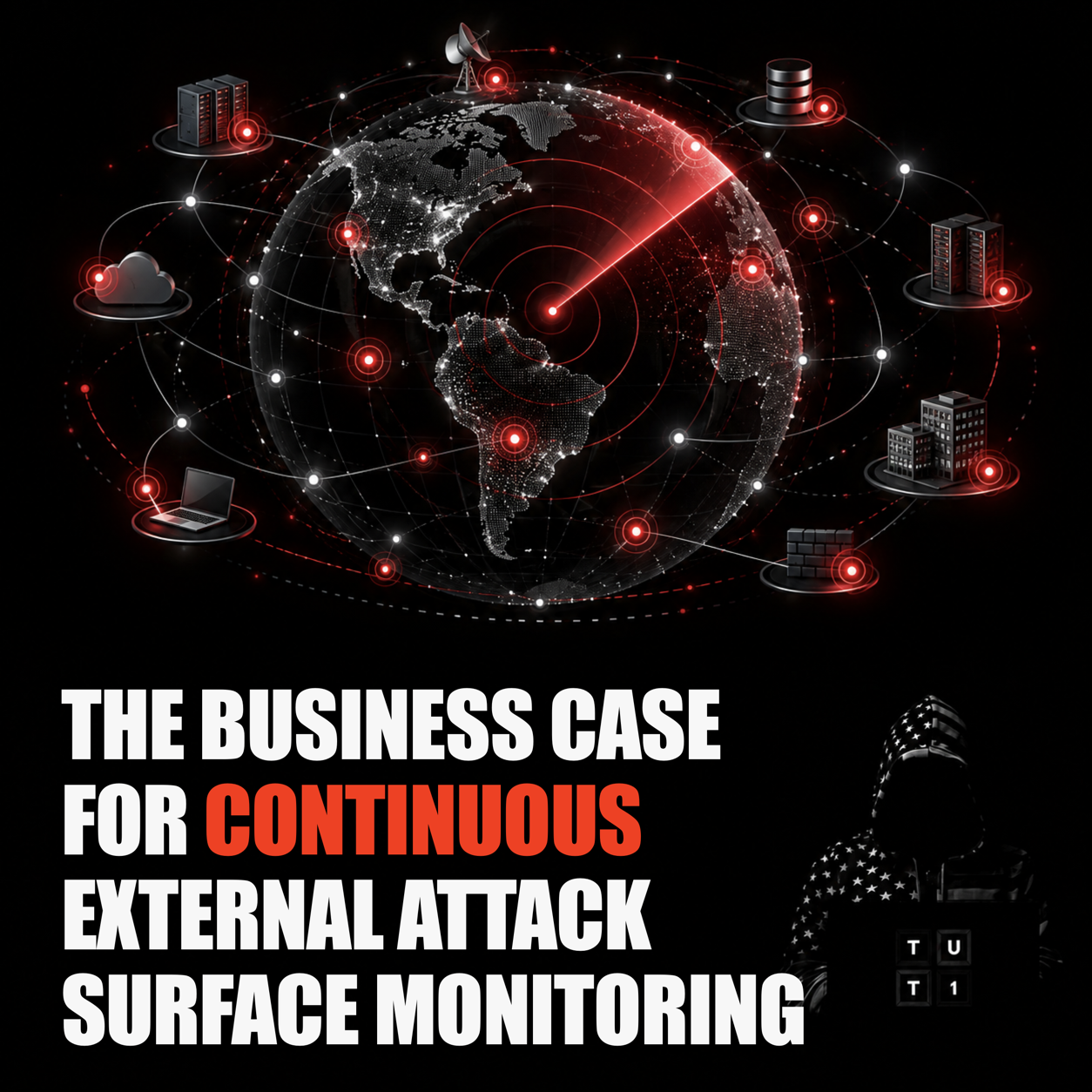
A point-in-time assessment answers, “What was exposed then?” Continuous monitoring answers, “What changed since?”
That distinction matters because attack surfaces are not static. New DNS records appear, certificates are issued, cloud endpoints move, suppliers change, services become reachable, and dormant assets return to life.
The business case is not more alerts. It is faster recognition of material change, less manual asset reconciliation, more accountable ownership, and better evidence for risk decisions.
Continuous monitoring also improves the value of periodic testing. It helps testers begin with a fresher scope and helps security teams retain visibility between annual assessments.
Security posture is not a snapshot. It is a moving operating condition.
TUT1 continuously maps external assets and exposure signals so teams can see meaningful attack-surface change before it becomes operational surprise.
Primary topic · continuous attack surface monitoring