From CVE Signal to Confirmed Risk: Stop Counting, Start Validating
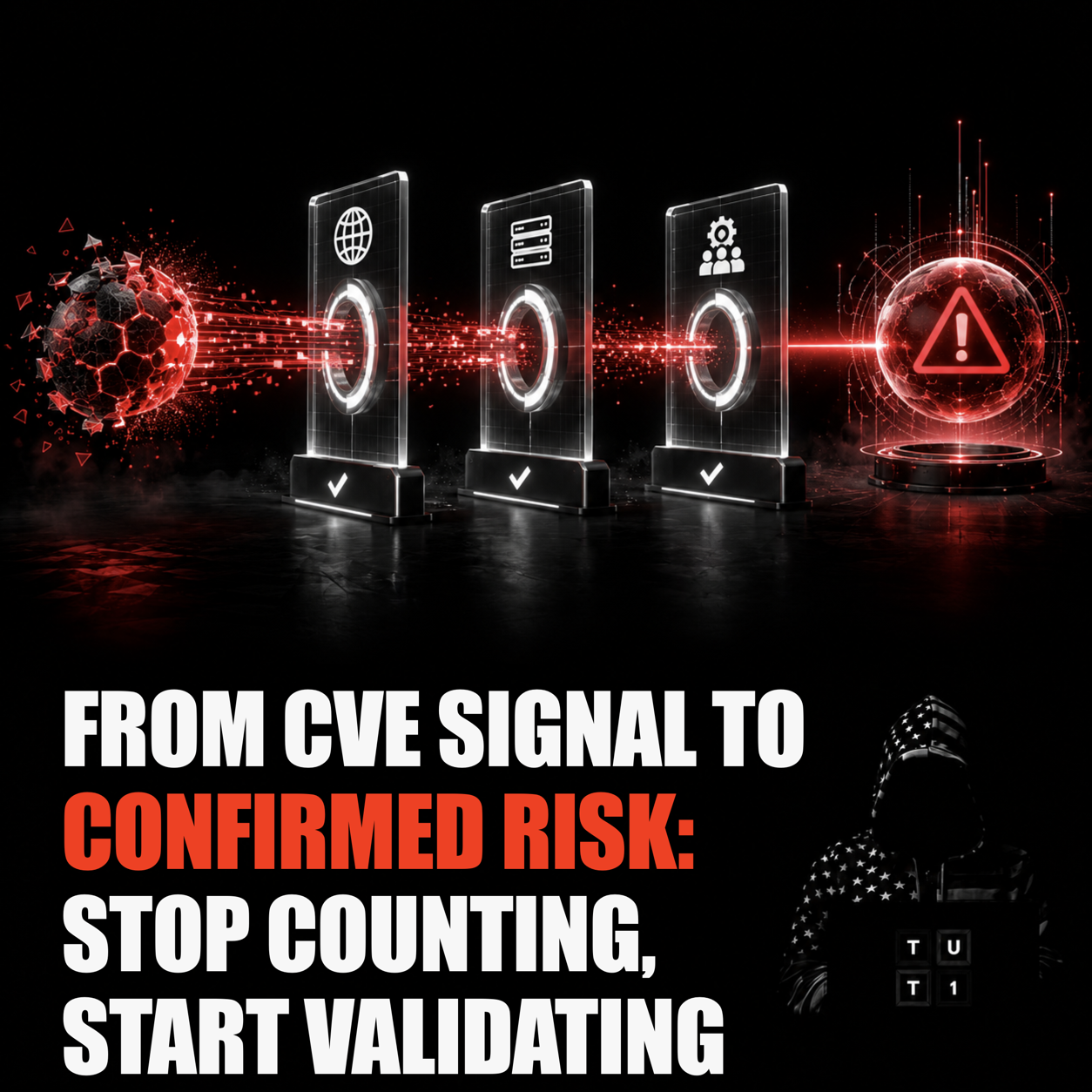
A CVE signal is a reason to investigate. It is not, by itself, a confirmed business risk.
The most useful vulnerability workflow asks: Is the affected software actually present? Is the service reachable? Is the version exposed in the relevant configuration? Is there a known exploitation path? What data or process sits behind it? Who can remediate it?
Counting CVEs creates activity. Validation creates decisions.
This distinction matters when teams manage thousands of internet-facing assets. A critical issue on an isolated, non-production host is not the same as a high-confidence exploitable path into a customer-facing system. Both may require action; they should not receive identical urgency.
Severity tells you what could matter. Context tells you what does.
TUT1 helps teams correlate external services, technology signals, CVE intelligence, and asset ownership to prioritize exposure based on evidence rather than volume.
Primary topic · vulnerability prioritization